Peace and War Center

Voices on Peace and War

Stories: Voices on Peace and War

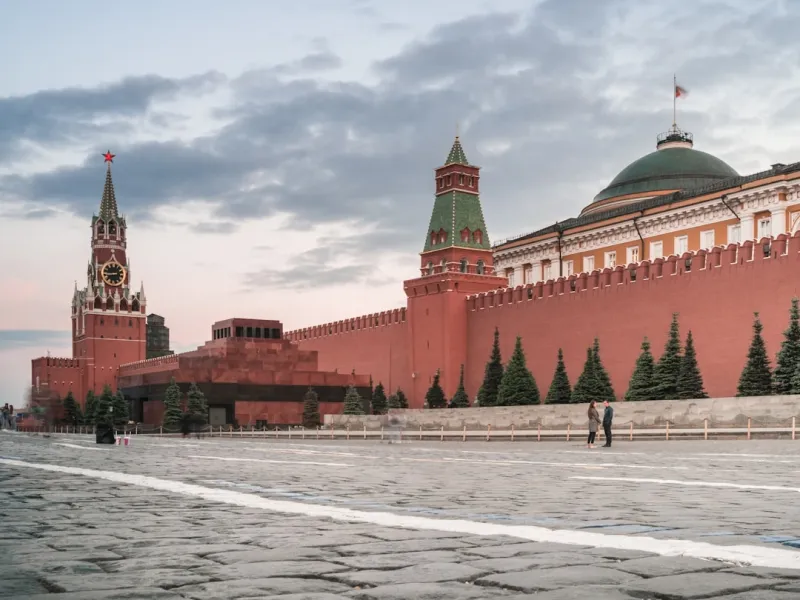
Image of the Kremlin building and courtyard in Russia

After the Parade, the Offensive: How Does Russia Follow Its Victory Day Parade When Victory is Far from Assured?

The article argues that Russia’s Victory Day parade is being used to signal a renewed summer offensive against Ukraine, with Volodymyr Zelensky warning that without faster Western military aid—especially air-defense systems—Russia could gain momentum both on the battlefield and across Europe’s security landscape. It contends that a stronger Russian position in Ukraine would increase pressure on the Baltic states, Moldova, and Finland through military threats, hybrid warfare, and political destabilization. The author concludes that NATO and its allies must rapidly expand military production, reinforce eastern Europe, and strengthen support for Ukraine and Moldova to prevent a broader regional conflict.

Read More 15 min read

Chess board featuring white queen piece with black pieces shattering in the air around the queen with Middle East map overlaid on the chess board.

The United States and the Crisis of Grand Strategy: Middle East Wars, Global Commitments, and the Challenge of Partisan Policy

The article argues that U.S. foreign policy since 1979 has been defined by strategic incoherence, partisan politics, and the absence of a consistent grand strategy, leading to failures in the Middle East, Global War on Terror (GWOT), and shifting policies toward NATO, Russia, and China. This instability has weakened alliances, undermined deterrence, enabled strategic drift, and highlights the urgent need for a nonpartisan, long-term strategy integrating military, diplomatic, and economic power.

Read More 8 min read

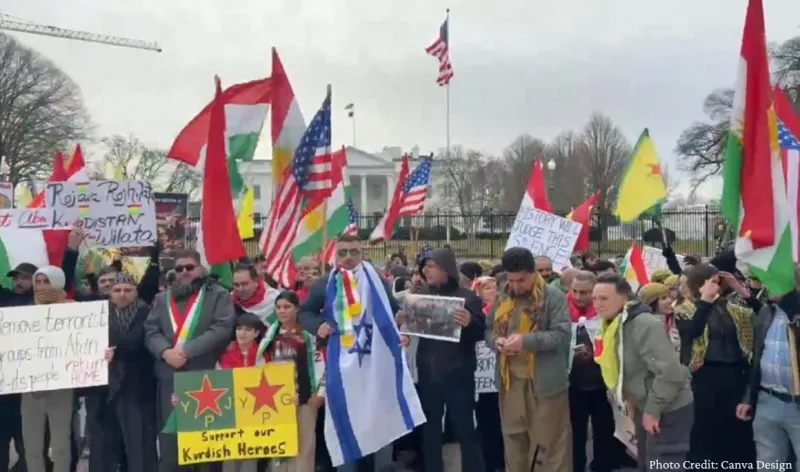
Kurdish Americans and supporters demonstrate outside the White House, carrying Kurdish, U.S., and Israeli flags.

America’s Kurdish Pivot in the “New” Middle East

This article outlines how Kurdish participation in many of the conflicts in the Middle East has shaped the trajectory of America's Middle East policy.

Read More 12 min read

Iranian flag faded into a desert scene with a woman in a burka in the foreground facing away

The Islamic Republic’s War Strategy: Survival at Any Cost as Victory

This article outlines the Islamic-Republic's war strategy as the US-Israeli conflict with Iran enters its third week.

Read More 7 min read

Deitch VPW Article Moldova2

Moldova Is the Next Front: Why the West Must Act Now to Secure Europe’s Most Vulnerable Democracy

The article argues that despite significant democratic and pro-European reforms under President Maia Sandu, Moldova’s progress remains dangerously fragile due to Russian military presence in Transnistria, hybrid warfare, energy coercion, and internal political polarization. It contends that only an immediate, coordinated strategy by the United States and European Union — integrating economic support, democratic institution-building, and defense modernization — can prevent Moldova from becoming Russia’s next destabilized frontier and secure its place within Europe’s security architecture.

Read More 7 min read

Dmitri Beliakov VPW article

The War That Refused to End

Four years after Russia’s invasion, the war in Ukraine has surpassed the duration of the Soviet Union’s fight in Operation Barbarossa and evolved into a grinding war of attrition in which Russia has failed to achieve its core objectives while Ukraine has preserved its statehood and defensive cohesion. Despite stalled offensives, mounting economic and manpower pressures on Moscow, and fading hopes for a negotiated freeze, neither side holds decisive advantage, pointing instead toward a prolonged strategic stalemate defined by endurance, resource constraints, and political resolve.

Read More 12 min read

Tracey Poirier Article

What is a well-informed citizenry today?

The article argues that the Founders believed a well-informed citizenry is essential to self-government, but today’s information environment makes that harder than ever. It explains that being “well-informed” isn’t just about consuming a lot of information—it requires balancing volume with variety, because overload plus confirmation bias can leave citizens simultaneously overexposed and underprepared to think critically, making individual effort and responsibility more important than ever.

Read More 8 min read

Perez VPW Article

The Trump Corollary and the Remaking of US Power in Latin America

The “Trump Corollary” is redefining U.S.-Latin America policy as a results-driven, outsourced enforcement model: Washington shifts the hardest political and legal burdens — migration control, detention, and security crackdowns — to willing regional partners in exchange for money, leverage, and diplomatic favor. This approach may deliver fast, visible wins, but it also strengthens illiberal governance, increases reputational and legal risk for the U.S., and creates a fragile form of regional stability that can backfire into deeper insecurity, resentment, and future displacement.

Read More 10 min read

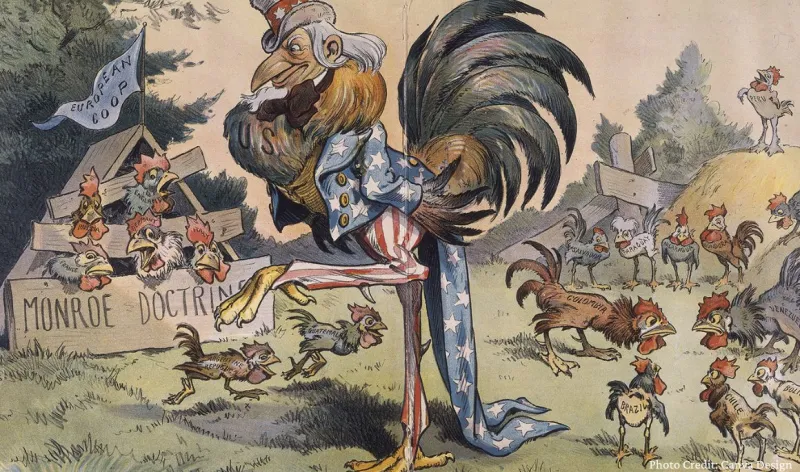
1901 Monroe Doctrine Political Cartoon

Roosevelt v. Roosevelt: Two Models for US Foreign Policy in the Western Hemisphere

The article contrasts two historical U.S. foreign-policy models in the Western Hemisphere — Theodore Roosevelt’s interventionist Roosevelt Corollary to the Monroe Doctrine, which justified direct military and economic control to enforce order and U.S. interests, and Franklin D. Roosevelt’s Good Neighbor Policy, which emphasized nonintervention, respect for sovereignty, and cooperative relations; it uses this comparison to suggest lessons for contemporary U.S. actions in Latin America.

Read More 9 min read